DFW's Largest Custom Sign Company SignsManufacturing.com Click HERE, or Call, to Request a FIRM, Installed, SAME-DAY PRICE QUOTE |
|||||||||||||||||||||||||||||||||||||||||||||||||||||||||||||||||||||||||||||||||||||||||||
|
HUGE Sign
CALL NOW We're waiting! M-F 8-5 Central
(877) SINCE79 toll-free
Dallas (214) 339-2227
Fort Worth/Arlington Areas (817) 861-1234
Hillsboro/Waco Areas (254) 582-7446
Sherman/Greenville/Paris Athens/Oklahoma (903) 561-5959
Denton/North Texas Southern Oklahoma Areas (940) 365-3433
Dallas Areas (972) 850-3300
Email our Sales Team or PUSH BUTTON
Push to Contact Signs Manufacturing™
"Click" to view our latest episode
| |||||||||||||||||||||||||||||||||||||||||||||||||||||||||||||||||||||||||||||||||||||||||||
Control SoftwareMore than any other part of the sign the operating software determines the usability of the system. Sunburst Displays™ proprietary operating software contains many virtually unique features into one package:
Text, Graphics, or BothSome competitive units only display text, some must display text as a graphic (drawing), some can display both text and graphics. Some competitors can only display "stick" letters (one line.)
Many varied letter-styles (fonts) are pre-programmed in all our units. All our units can also automatically place text over graphics pictures. On our monochrome units (one color) text and graphics can be displayed in 1 or 256 shades of the one color. Full-color units display 281,000,000,000,000 separate shades. All Sunburst Displays™ software can display fixed messages or graphics (drawings) or “scroll” messages or graphics (drawings) and include F/X features. We also show a display such as a cartoon with character movement, for instance. Monochrome displays convert colors to shades of either Red or Amber (Yellow.) All Sunburst Displays™ programming can display pre-programmed messages and pictures in a slideshow format, much like a screensaver slideshow showing multiple messages or images. All Sunburst Displays™ proprietary software can display videos of varying random lengths. Live Video or TVLive video or television feeds are available options. SchedulingSchedule various messages, graphics or videos to automatically run at various times of day or night with Sunburst Displays™ software. Double-Sided Display Programming OptionsMost competitive units display the same message or animation on both sides of a double-sided display. However some competitive units can only be programmed totally independent of each other. There displays will not synchronize, so they take twice as long to program. Sunburst Displays™ standard is a synchronized display, with independent programming an inexpensive option. Display Size and AppearanceSome displays have "retainer", or a picture frame around the display. Some displays are "bleed", or the matrix goes to the edge of the face. A bleed face gives more display space in the square footage allowed if a city has a restrictive sign ordinance. Glare Shields (Louvers)
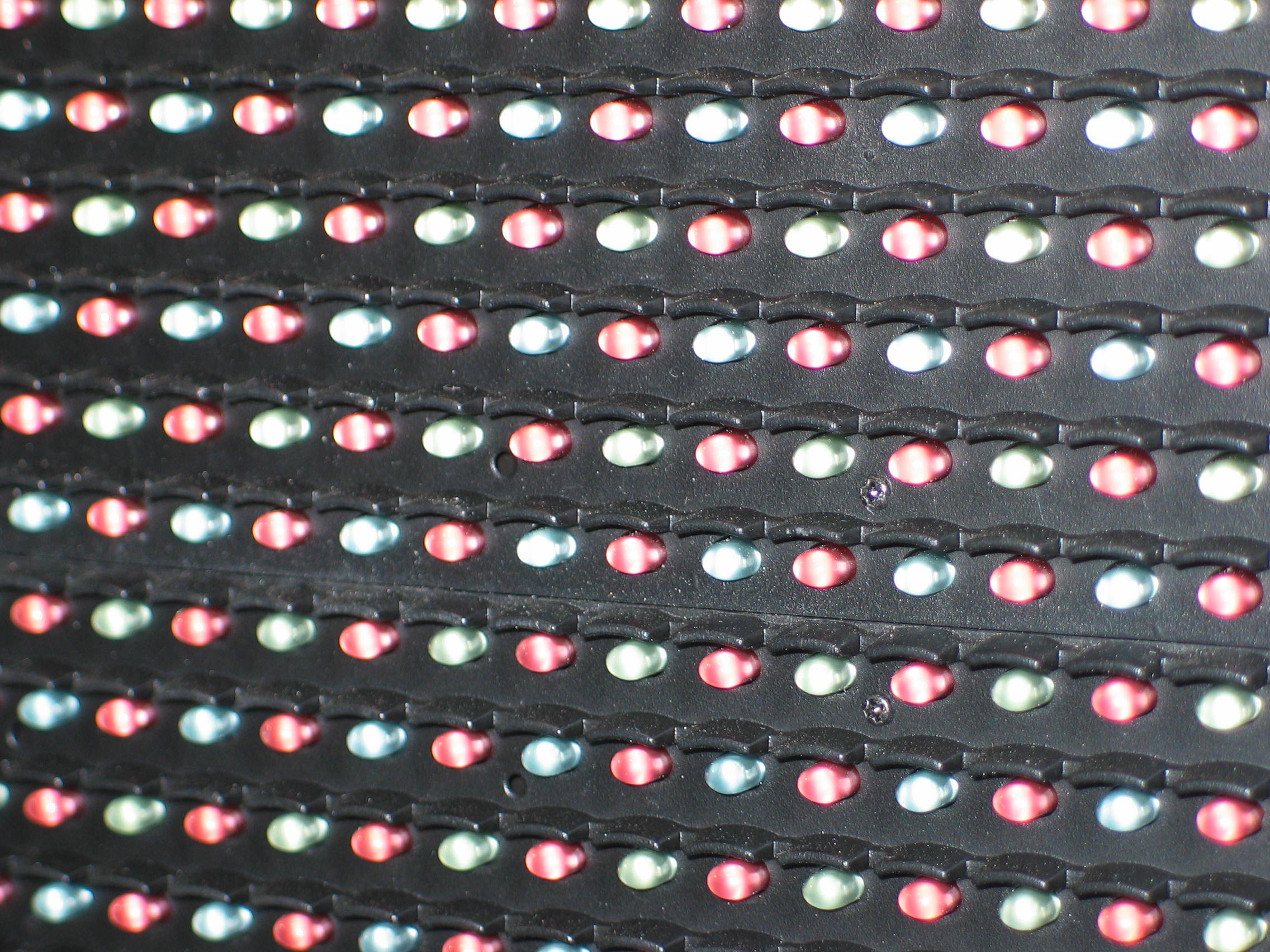
Sunburst Displays™ curved glare shields are individually molded into the actual face, not bolted on, to individually shade each LED. These features guarantee that our shields are effective and positioned properly. They also allow our shields to be as small as possible to eliminate their interference with viewing our displays from below or above. This is a very common problem with competitive displays with shields that are straight, or continuous. Theirs are less effective and must be much larger, limiting the viewing angles of their signs. Automatic Brightness ControlSunburst Displays™ and other quality displays automatically adjust their brightness to the current lighting conditions. Display BrightnessLED’s are affected by voltage. For instance, an LED will burn nearly 100% brighter if you double the power feeding it. The LED will last about 1/6 as long, however, making this alternative quite expensive in total cost. LEDs dim as they age. At some point (subjective) they will need to be replaced because they are too dim. Feeding them less voltage extends their useful life. Sunburst Displays' engineering goal was to balance brightness and longevity. If only brightness is important a monochrome display that does not include a grayscale feature, or automatic brightness adjustment, will be the brightest, at least initially, because all LEDs will always be fully-powered. The LEDs can also be more closely packed because only one color of LED is used; room does not have to be dedicated to other-colored (RGB) LEDs. Colors in motion, though dimmer than monochrome, have proven to be a better attention-getter, and the displays last longer. Temperature SensorA thermometer installs on the sign cabinet and plugs into the sign computer in systems set-up for this feature. Time and Temperature Display OptionsWith this option, and a temperature sensor, the controlling computer can have the display flash, scroll, or constantly display time and temperature. The best systems display “atomic” time and self-adjust for daylight savings time. Computer Link TypesOptical Fiber. Run underground from the sign to the controlling computer, usually inside the building. This fiber must be run in separate conduit, but it can be buried in the same trench as the electrical supply. Phone Control. The unit can have a cell phone number and a modem. Simply call the sign from the controlling computer and tells it what to do. The internal memory of the electronic message center repeats these instructions until they are changed. RF Wireless Modem Communications. An antenna is placed on the sign, and on the building, which is hooked to the controlling computer. Wi-Fi Modem. Uses a wireless modem connection in the computer, and in the sign cabinet, to communicate. Group LinksIt is possible to have one computer control multiple of our electronic message centers (all Long John Silver’s are, for example.) Besides the computer that is used to program the sign there is a processor or a computer inside the sign in most systems. The poorly engineered signs are programmed and controlled by a single computer that is hard-wired to the sign and must be left "on" at all times. Or, in some cheap signs a second "personal computer" is actually installed inside the sign. The problem with either of these systems is that the sign is running on "Windows" using a CD or hard-drive and is additionally subject to all the viruses, freezes, lock-ups and reboot problems that a personal computer faces. (As a simple example of the problems faced, who climbs the pole of a free-standing pole sign to reboot the computer after a power outage or computer lock-up? Service call.) Plus, with all the moving parts in hard drives, disk drives, and other humidity and temperature sensitive components, a PC is a poor way to run a sign from inside the sign. They fail often enough when they are used in the controlled environment of a building. Tremendous cooling is required when there is an "Intel Inside" but many of these poorly engineered units don't even have cooling fans for the LED displays, much less the computer's processor chip. In the worst of all signs, the software to program the computer inside the sign is not even in the sign owner's possession. It is not on the programming computer, it is "on the cloud." The sign’s computer must have high-speed internet access. What if the sign manufacturer does not own the software, he uses a third-party system, and they notify you that in order to keep your sign operating you will now have to pay them $2,000 per month to continue access to the programming software. This happens all the time with other "free" software. Or, he controls the software "on the cloud" but goes out of business so your sign cannot be programmed by anyone. We don't have a "computer" in our signs. The processor in our signs is a "mother-board" with a non-volatile memory (no heat-sensitive processor chip) and its sole purpose is to store and control using the commands you send it from the programming computer we furnish Free with the sign. (No rebooting!) The processor stores up to 64 GB of text, images, and video. Enough memory to change the image on the sign every second for 723 days! The memory in non-volatile, no reprogramming after a power failure, as is common in some competitive units. The programming software is on the computer we give you, and we also give you a back-up copy. This vastly superior system also uses less energy. VentilationHeat is the enemy of LED’s. Sunburst Displays™ electronic message centers have multiple inflow and outflow ventilation fans. Additionally, every heat-producing component has its own internal cooling fan. Larger units incorporate air conditioners into their design. Excessive heat can shorten LED life by up to 80%. In poorly engineered signs with little (passive) or no cooling, decreasing the pitch, increasing the size of pixels, or over-driving LED’s with higher-than-required voltage to increase their brightness, increases heat, shortening the life of the unit. Some units vent out the front of the sign, some out their sides, and some out the rear. This affects how each unit can be installed. For instance, a unit that vents out its sides cannot be covered with brick. Solarbrite™ Light Emitting Diode (LED) TechnologyMany companies manufacture LED’s. There are over 5,000 varied LED’s available, and they vary greatly as to brightness, lux, light-dispersal (viewing) angle, useful lifetime, and lifetime. Some are very cheap, some are quite expensive, but all cost more than neon for equal illumination. Signs Manufacturing Corporation's Sunburst Displays™ only use Solarbrite™ LED’s that are rated to retain 80% of their brightness for 60,000+ hours. These are the most expensive, but highest value, LED’s. Our selection of LED’s is what makes our signs brighter, and last longer. As an example, a White Solarbrite™ LED is 280 lux, compared to our BrighterSigns™ neon's 235 lux, or standard neon's 140 lux. A Solarbrite™ LED incorporates a new kind of chip, different from all other LEDs. Signs Manufacturing™ is an industry leader in the implementation of new technology in advertising. Solarbrite™ LED’s utilize military specification coatings on the circuit boards the LED’s are attached to, preventing corrosion and electrical problems. Like neon, LED’s are also affected by voltage. For instance, an LED will also burn nearly 100% brighter if you double the power feeding it. The LED will last about 1/6 as long, however, making this alternative quite expensive in total cost. We power our Solarbrite™ LED’s properly, and offer a 5 year warranty on the LED’s in our lighted signs. Incandescent LightingIncandescent (household) lamps begin disappearing in 2012, starting with the 100 watt lamp, and will be mostly gone by 2016. The Government has mandated that all these lamps, with 22 exceptions, must begin being at least 25% more energy efficient starting in 2016, 70% more efficient by 2020. "Sign Service" lamps are exempt, but whether or not lamp manufacturers will recognize a big enough market to continue to make just them is problematic. ServicingOur signs are front-serviceable, but they do not hinge like some older designs. By eliminating the "hinge" we avoid a potential place for water to get into the sign. Our signs are sealed to avoid leaking water, but the LED parts can all be accessed from the front of the sign! To speed trouble-shooting we've also incorporated our LEDs into our circuit boards as a diagnostic aid in our Sunburst LED Displays™. Few manufacturers of LED signs have taken this logical step. The Value of “Listed" SignsVirtually ALL cities, as well as the State of Texas, adopt the National Electric Code as law. The National Electric Code (NEC) requires that for electrical, structural, and installation safety all electrical signs be "Listed" (tested and labelled with an appropriate Listing Mark.) Certification (testing and labelling) organizations acceptable in the USA to test to the multitude of Standards signs are required to meet are determined by OSHA. For you the Listing Mark is assurance. It means that the sign has been tested to insure that it is structurally and electrically safe, and will be installed properly. You benefit from the knowledge that it is not solely us telling you that our signs are safe, this is what the testing laboratories and the US Government says also. Underwriters Laboratories (“UL” Listing Mark) and Intertek (“ETL” Listing Mark – originally Edison Testing Laboratory founded by Thomas Edison) are the premier certification organizations and 80% of all things electrical are tested by them. If the sign you are purchasing does not have a ETL or UL Listing Mark label the sign is probably not legal to install, anywhere in Texas. There are a few local city ordinance exceptions. Buy carefully.
Whether it's channel letters, a wall cabinet sign, a monument sign, pole or pylon signs, electronic message centers, neon or other electric signs Intertek and Underwriter’s Laboratory pose the toughest design, structural, electrical, and installation standards on the products they approve. We are the 9th oldest UL Listed Manufacturer in North Texas. (File #UXYT.E149959) To see if a manufacturer is a UL Listed sign manufacturer go to http://database.ul.com/cgi-bin/XYV/template/LISEXT/1FRAME/ccnsrch.html and enter "UXYT" in the "UL Category Code" box, replacing "%ccn%". To see if a manufacturer is an ETL Listed sign manufacturer go to http://etlwhidirectory.etlsemko.com/WebClients/ITS/DLP/products.nsf/$$Search?OpenForm and enter "UL-48" in the search box. We are the third oldest ETL Listed sign company in Texas. ( File #4007685) (One of the two older companies makes lighted scoreboards, the other makes lighted office door signs.) There are many sign companies that pretend to be Listed, but are not! Incidentally, ISO (International Organization of Standardization) Standards, such as ISO 2001, are NOT electrical Listings (similar to a UL or ETL Listing) that allow a sign to be installed in Texas. That said, components in our electronic signs also meet ISO 2001 standards. The Savings Advantage of a “Listed" SignListed Signs Save You Money. Sunburst Displays Video Displays and Electronic Message Centers, because they are Listed, are approved to operate with approximately 40% of the power supply requirements of unlisted signs. This is a huge savings in installation costs, as only 1/3 of the comparable electrical service needs to be provided. And since the National Electrical Code limits the branch circuits serving signs to 20 amps maximum, this equates to many fewer circuits. For safety, an untested sign (not Listed) must be supplied with enough electricity to meet the total “continuous” needs of each internal components rating. (Each components rating x 125%) A Listed sign has been tested as a whole, and the amount of energy actually used has been determined. The sign is approved for use when supplied with this amount of electricity, regardless of the ratings of the individual components. This is always much less than the rating of each internal component taken individually, so the cost of installing electricity to the sign will be significantly less. Electrical120 volt single phase service is normally required because these Listed displays do not consume a great deal of energy, but some units require 240 volt 1 phase. Remember, however, that other parts of the sign will have electrical requirements also. Electromagnetic InterferenceRadio Frequency (RF) interference from the sign can cause a sign to interfere with radios, cell phones, radar, TV signals, automatic door openers, hospital equipment, etc. Radio frequency interference can also cause radios, cell phones, radar, automatic door openers, TV signals, hospital equipment, etc. to interfere with the sign. Although not required in the United States, Signs Manufacturing™ had our electronic signs tested for Electromagnetic Compatibility (EMC) and Electromagnetic Interference (EMI), even testing beyond the rigorous European standards. This assures you of an even-more-trouble-free sign when you purchase from Signs Manufacturing™. Energy ConsumptionThis varies by the message displayed, and how long the electronic message center is on. That said it is uncommon for ANY electronic (LED) message center to use over $1.00 in electricity in a day. Energy CaveatSome electronic message center manufacturers, more interested in the sale than the needs of the customer, overdrive their LED’s to make them brighter (usually because they are using inferior LED’s.) Besides shortening the lifetime of the display to 1/6 of a properly manufactured display it wastes energy. Sunburst Displays™ does none of this! We do provide internal overvoltage, low voltage, spike and brownout protection for the sign. Many manufacturers do not. SoftwareThe system should have easy to use control software with built in features such as scrolling and blinking messages and a time and temperature display. It should also allow you to preview both individual messages and your whole display queue without forcing you to show the world your half-finished ads by running them on the display. The message should be able to be changed from inside your business, or the system should be configured so that “headquarters” can change the message at each store. Software TrainingLearning how to program an electronic message center is not hard. Most good manufacturers have teaching CD’s in addition to Technical Assistance. Many have telephone training included as part of their package. Signs Manufacturing™ is particularly adept at these systems, and helps our customers until they no longer need us. Then we come back when they find they were premature. Product and Technical SupportMost important in an investment of this size is product support. The electronic message center manufacturer must be large and dedicated enough that they will continue to support their products with parts. Technical support must be easily available and there must be no limit to your access to it. Even after you have become an expert, and years later, you might have difficulty programming a new-look message. Make certain your electronic message center manufacturer and installer will be there to help you 24 hours a day. Minimum Computer RequirementsMost up-to-date computers, purchased within 2 years, have enough memory to create control programs. It is usually NOT necessary to buy a separate/additional computer to control an electronic message center. Free Programming with Sunburst Displays™Each Sunburst Displays™ electronic message center comes with a "free" pre-programmed laptop computer ready to remotely program your new electronic message center.
Full-color displays can also be programmed using Power-Point, Corel, Photoshop, or any graphics software you are familiar with. So you already know how to program the sign! The programming computer communicates via Wi-Fi, so you probably already know how to work it, and it only needs to be "on" when you are changing the program. The sign runs on its own internal processor. You can create a program at home, and download it to your sign when you get to your business, if you desire. Proprietary encryption in both the sign and the programming computer software make the sign impossible to use by anyone else. SolarGuard™ Protection for Sunburst Displays™Our plastic faces that hold the LEDs, and Glare Shields, have internal UV protection. But your sign needs to look nearly as good 10 to 15 years from now as it looks the day it is installed. The longevity and appearance of plastic face materials are extended when they are coated with SolarGuard™, a special, clear, high-gloss, mar-resistant topcoat which protects plastics from ultraviolet light and ozone so that they last longer, just like your eyeglasses have UV coatings to protect the plastic lens.
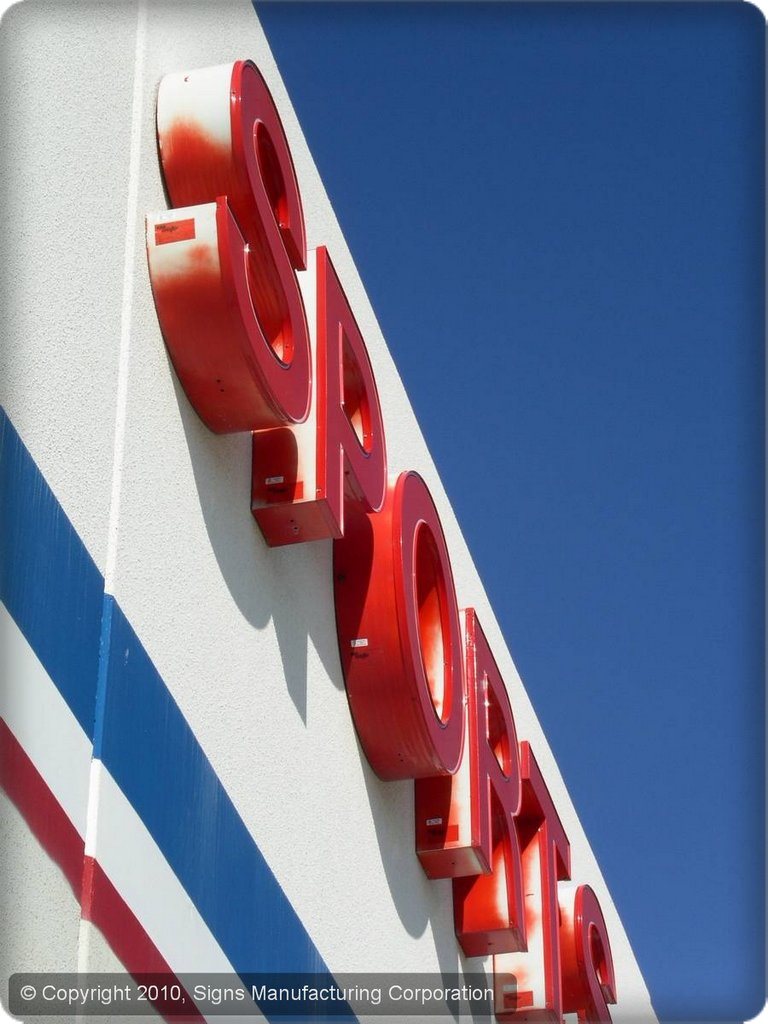
Signs Manufacturing™ adds SolarGuard™ protection to every plastic sign face component. Does SolarGuard™ Protection Work? The face on the right was made of “generic” red acrylic and black trim-cap. The left half was coated with SolarGuard™ and the face was left outside for ONLY 7 years; your sign will be out there much longer! (This product does not come from the traditional sign industry. Few sign manufacturers know about it, or where to get it.)
EMC faces that were NOT protected with SolarGuard™ (Click on each picture to Enlarge.) Self-Cleaning Faces for Sunburst Displays™Signs Manufacturing™ adds Lumabrite™ coatings to every plastic-faced sign. Lumabrite™ reduces maintenance because of built-in self-cleaning properties. This products inspiration was the optical plastic lens industry. Our people are factory-trained in the application of Lumabrite™. Construction Details for Sunburst Displays™
Aluminum is also used for all exterior surfaces of the sign cabinet, again to prevent future rusting. Almost all Chinese-manufactured signs, among others, have steel cabinets and face-plates. Free-standing signs are engineered to survive a 140 mph wind. With some manufacturers, incredibly, the face-plate is merely many individual pieces bolted together. Hardly engineered to withstand 140 mph tornado winds. Water is the enemy of electronic message centers. Sunburst Displays developed a unique cabinet design that channels water and ice away from vital internal electrical components. The face boards, containing the LEDs, are gasketed and hermetically sealed to prevent moisture from entering the sign through the faces.
All fasteners are galvanized or non-corrosive; no rust. Most Chinese displays are painted with questionable paints. (Remember when the Chinese were caught painting Mattel kid's toys with lead paint?) We even add self-cleaning properties. Revolutionary Ceramic Vacuum Microsphere ShieldDuring a Texas summer, your Texas electronic message center can experience daily internal heat levels of over 200* F, enough to seriously damage it, shorten its life, and cause you expensive repairs. High heat is very hard on electronics and LED’s, and shortens both their lives. NASA, with the Space Shuttle program, has proven the value of insulating ceramic vacuum microspheres as a thermal barrier to both heat and cold. While not as debilitating as temperatures experienced by the Shuttles, we commonly experience temperatures well over 200º inside Texas signs. Water boils at 212º at sea level. Signs Manufacturing™ builds a better sign. We cover the metal exterior of each Sunburst LED Display™ with the same ceramic vacuum microsphere barrier developed by NASA. We have documented 30% internal heat differences, 60º cooler at 200º, accompanied by an 80% increase in heat dissipation when compared to identical signs without our ceramic shield. NASA confirms that 90% of solar infrared and 85% of ultraviolet rays are reflected by this revolutionary product. Visually the only difference is the very slightly textured appearance of our ceramic barrier when compared to uncoated metal; a small price to pay, especially since you will never notice the difference. We still use the same wonderful paints with the same excellent results. Impact protection from hail, asteroids, and other objects is vastly improved also. Made in Texas, for Texans, by Us.™ Automotive+ Paint Finishes on Metals for a Quality AppearanceThe goal of every sign is to be noticed. Paint your sign some color other than Architectural Brown, which is what the Chinese paint ALL of their signs. Stand out. You have 32,807 choices. Maybe even add a neon border. We can do that!
Signs Manufacturing™ also uses the new Signlux Paint Systems™ Automotive+ paints and two-part primer systems. The entire channel letter sign will be epoxy primed, then finished with Signlux™ modern acrylic urethane automotive type finish coats, to insure that it continues to look good for many years. Even though these paints and primers are five times more expensive the long-term results are well worth the price. In fact, the same paint types are used by BMW, Ferrari, Rolls Royce, and many other luxury automobile manufacturers to paint their cars! But, Signlux™ offers many advantages over “automotive” paint when used on signs. Signlux™ features compatible systems of very durable, high solid yet flexible paints specifically formulated for applications on metals, plastics, wood, banners and flexible sign-face materials. These paints do not chip off the surface because of heat-freeze cycles. The paints are UV stabilized to virtually eliminate fading. Signlux Paint Systems™ feature their own paint intermix system. The system uses the latest in paint mixing technology; more sophisticated than any paint store's. An astonishing 32,807 colors can be mixed. Virtually all PMS (Pantone) colors can be closely matched. Color-matching opaque and translucent paint formulas are featured. Metals are painted opaquely. Plastic and flexible sign-face materials are painted translucently so that the sign face lights in color at night. Not all sign companies do this! Metals can be painted with either a solid color or "metallic" finish. Signlux™ is compatible with our Ceramic Vacuum Microsphere coatings protecting the electronics in the Sunburst™ Digital LED Electronic Message Centers and Video Displays we manufacture. Our painters are factory-trained and certified. Our painting is virtually blemish-free. Painting air is cleaned and dried twice before entering the paint booth, and again before painting. Our state-of-the-art paint booth, 25’ by 25’ by 16’ tall, with full-sized entry/exit doors on each end, filters the air coming into the booth as well as the air discharge. (The booth even has its own built-in explosion-proof lifting crane.) Free Factory TourCome and see the array of equipment and tools, and the facility dedicated to making good signs. Contact a sales consultant to arrange a plant tour. Quality Certified Signs™ Trained Technicians
Go to www.QualityCertifiedSigns.org for listing details. Certified WeldingSunburst Displays™ employs Certified Welders; horizontal, vertical, and overhead. We are virtually the only sign company in the Dallas/Fort Worth Metroplex employing certified welders. Manufacturing Lead-TimesThe quality suppliers get their product to us in 4-8 weeks. Our manufacturing cycle is usually slightly shorter than this. Since most electronic message centers are built into or installed as part of additional signs we need time to fit the parts together. Warranty
If ANY part of a Sunburst Displays™ electronic message center fails in the first three years of service, if properly supplied with power, Sunburst Displays™ will provide BOTH parts and service FREE OF CHARGE through Signs Manufacturing™. Even stronger, this Initial Warranty is extendable to six years. Plus, Sunburst Displays™ warrants their sign with a LIFETIME* WARRANTY, again through Signs Manufacturing™, that reduces both our normal labor rates for service, and parts costs, 20% forever. Sunburst Displays™ Lifetime Warranty*is transferable at no additional cost! No other Digital Electronic Message Center manufacturer IN THE WORLD provides a warranty on ANY labor, much less a transferrable warranty. Additionally, after the Initial Warranty period, Sunburst Displays™ will provide free replacement parts for any previously replaced part that fails within one year of installation. Other manufacturers whose products we install and service have varying new-sign parts-only warranties that average 3 years.
Controlling Message Center CostElectronic Message Centers cost a lot of money, but they achieve tremendous results. To keep from spending more money than necessary, consider the design of your sign and the results you want to achieve. Rather than purchase a larger, blank, rectangular message center and display your name and all other information on it, consider incorporating signage that constantly displays the messages you want to constantly display. It will cost less, and look better! Because we manufacture and install all types of signage, not just electronic message centers, we can design, build, and install the most cost efficient and effective signage for you (see our "Design Center" page!)
"Click" Below for Additional Information on Installing an Electronic Message Center in:
Select the link "Electronic Message Center Check List". This is a tool for your use to insure that quotations you receive are for the same sign! Insist that your bidders fill-in each line, then sign the document when they give you their quote. If you know all the details of the sign you wish to purchase, and desire to buy it right now, click the following link to go to our online LED Electronic Message Center Purchase Page. Free Demonstrations - Sunburst Displays™Arrange an on-site demonstration today! Demonstrations are available in the Dallas/Fort Worth Metroplex and all of North Texas. View the importance of what we discuss on this website. Call us at 214-339-2227, 817-861-1234, 972-239-4448, or 800-333-7137. FAX us at 214-339-9987. E-mail us at sales@SignsManufacturing.com. Available in ZIP Codes 75001 thru 76958. Area Codes 214, 254, 430, 469, 682, 817, 903, 940, and 972. Serving Collin, Cook, Dallas, Denton, Ellis, Fannin, Franklin, Grayson, Henderson, Hill, Hood, Hopkins, Hunt, Johnson, Kaufman, Lamar, Navarro, Parker, Rockwall, Somervell, Tarrant, Titus, Van Zandt, Wood, and Wise Counties in Texas.
Electronic Message Center RentalsWe rent trailer-mounted self-powered electronic message centers. Rental units are available for the Dallas/Fort Worth Metroplex and all of North Texas. "Click" on the "Message Center Rentals" tab to the left to learn more. Using Our Website to Learn About Signs and Create a Successful Image.
An example of our dedication to helping our customers succeed is this website. It IS the definitive source on signage information, ranked by Alexa® in the top 0.05% of ALL websites in the world, the top 0.01% in the USA! Not bad for a sign company serving North Texas. (We placed the website online in 1999, and have been improving it ever since.) Click our "Sign Types" tab to the left, then pick any of our products and discover how we make each sign to last; including the use of CNC manufacturing, rust-proof metal, structural-steel frames, high-end automotive paint, high-impact plastics, and most importantly, sophisticated protective coatings. All our signs include these many hidden features, critically important to you but often ignored by competitors so they can make more money. We even add self-cleaning properties. Signs Manufacturing™ makes more than lighted and unlighted business signs. We manufacture, install and service church signs, school signs, apartment signs, park signs, governmental signs, architectural signs, etc. Interior signs as well as exterior signs.
"Click" our "Sign Types" tab and Channel Letters, Wall Cabinet Signs, Pole or Pylon Signs, or Monument Signs also to learn about our "EZ Install Signs™" that are manufactured so that you can install them yourself. We champion brighter, energy-saving solutions that save our customers money while protecting our environment. No matter what type of signs you are considering, please explore our "Lighting Choices" tab for that product, with its own "Energy Savings" tabs. In fact many of our unique sign designs can even be Solar Powered! We
have lots of experience. Click our "Design Center" tab to the left to learn how
we can We will give your company an edge and help make you money. We are the "greenest" sign company in Texas. Click the "Our Environment" tab on our "About Us" page to learn about our environmental efforts. Please use and enjoy this 400+ page, always growing, website with over 2000 images, the largest information resource about signs on the internet, created so you can learn about all types of signs and how you can control their affect on your image. We believe that if you're a knowledgeable purchaser there's a real good chance you'll become our customer.
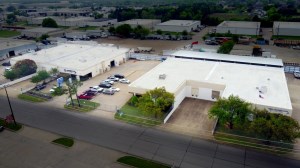
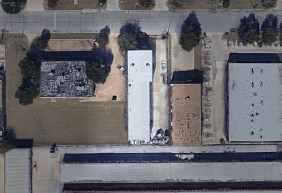
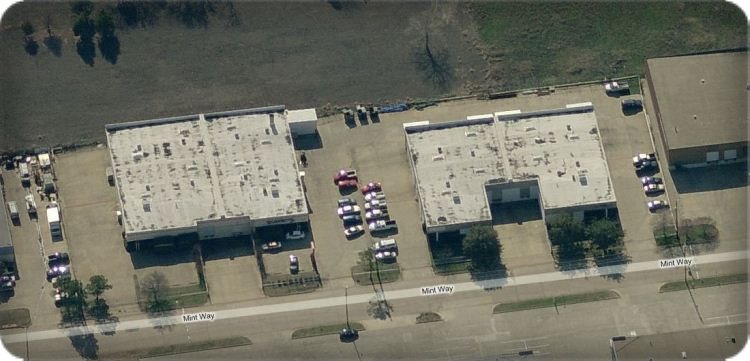
Signs Manufacturing Corporation's Four-building Manufacturing Campus prior to our 7,500 sq. ft. expansion in 2004 (Photo courtesy of Bing.)
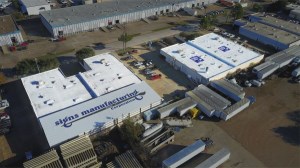
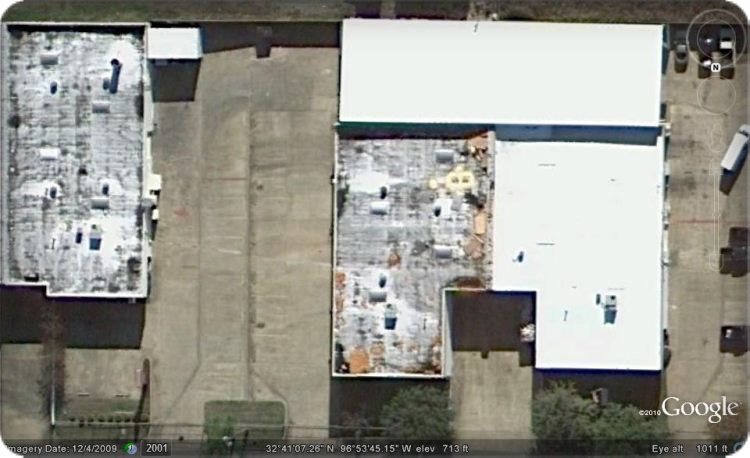
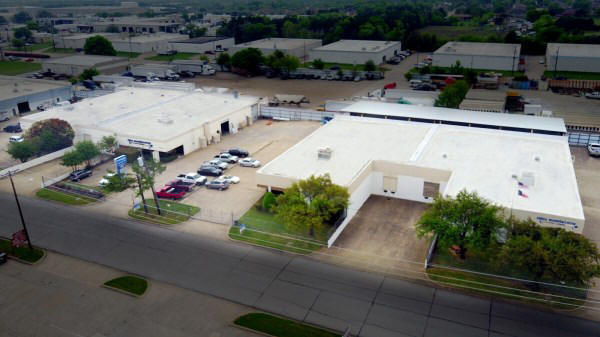
Weekend photo showing Signs Manufacturing Corporation's 2004 Building Expansion, taken during our 2009 re-roofing project (Courtesy of Google Earth.) Texas' Success Story
North Texas is expected to gain over 4,000,000 new residents in just the next 4 years! The business economy HERE remains healthy! Well over 100 new businesses are started in just the D/FW Metroplex every week. Don't let the "doom-n-gloomers" talk you out of being successful. This is the best time ever to start a new business in North Texas and Northeast Texas. State Licensed Sign Installation and Sign ServiceWe are a full-service sign company. We provide sign site surveys, sign permits, sign installation and sign maintenance services for electrical and non-electrical signs for our customers as well as other sign companies. We provide this work in Dallas, Fort Worth (DFW), and ALL of North Texas and Northeast Texas. State Sign and Electrical License Numbers: TECL17503, TSCL18015, TSCL18016.
ZIP Codes 75001 thru 76958. Area Codes 214, 254, 430, 469, 682, 817, 903, 940, and 972. Serving Collin, Cook, Dallas, Denton, Ellis, Fannin, Franklin, Grayson, Henderson, Hill, Hood, Hopkins, Hunt, Johnson, Kaufman, Lamar, Navarro, Parker, Rockwall, Somervell, Tarrant, Titus, Van Zandt, Wood, and Wise Counties in Texas. We also have signs in 43 different states, and 6 other nations. WHOLESALE TO THE PUBLIC!The Signs Manufacturing™ Commitment to Quality
Local, In-House Sign Manufacturing - Single-source local responsibility, without middlemen. UL® plus ETL® Approved Manufacturing - The ONLY manufacturer in the Metroplex regularly inspected by both OSHA-approved Listing agencies. Our signs are approved for installation anywhere, worldwide. Turn-Key™ Full-Service Sign Company - We manufacture, install, and service all signs; ours and others. Seven cranes/bucket trucks to 80' reach. Seven installation/service crews. We Are Also Electronic LED Sign Experts - We build, install and service our own programmable LED signs, Sunburst LED Signs™. We have the knowledge and ability to install and repair our competitor's signs too. Unique Quality Signage Products
-
We offer products you won't find anywhere else. Eleven Person Sales Team - We'll come to you. Exclusive Automatic Updates System - Keeps our customers informed every step of the permitting, fabrication and installation cycle. Trained QualityCertifiedSigns™ Technicians - We have a heavy focus on quality fabrication and installation. Product Liability Insurance - Protects you and your customers forever. Deposit Insurance - Your deposit is safe. State Licensed Electrical Sign Contractor - Licensed for electrical sign installs anywhere in Texas. State Licensed Electrical Contractor - Not just signs, we know electricity. Many Different Payment Options - Cash, Credit Card, Conserve Your Nest Egg™, Signs on Time™ Lease (with Zero Down option) and Pay as You Grow Lease/Purchase™ Delayed-Deposit Billing™ - Significantly reduced initial billing to help you control your cash-flow. Grand Opening Package* - We want you to be successful; here's another way we're helping. A free "Coming Soon" and "Grand Opening" banner with your name on it, and free "store" hours lettered on your door. *Minimum order required. Why use Signs Manufacturing?
We're not just a sign company, we're unique. And apparently our customers appreciate our help because we're the largest sign company in the DFW Metroplex. Many, many details follow on how we intend to help you be a success.
Guaranteed Highest Quality...Guaranteed Lowest Price™WHOLESALE TO THE PUBLIC! Signs Manufacturing™ guarantees that our price will be the lowest price you can obtain on the product(s) described in this brochure; now or anytime during the next 90 days. If you are offered a lower price by someone else we will match that lower price PLUS give you 10% of the difference. What does anyone say who can't compete in quality, timeliness, professionalism, etc.? "I can save you money!" But with Signs Manufacturing's "Guaranteed Lowest Price" that's just not true. You CAN have it all! This is another reason we're the largest.
Large, or Small, We Make (and service) them All
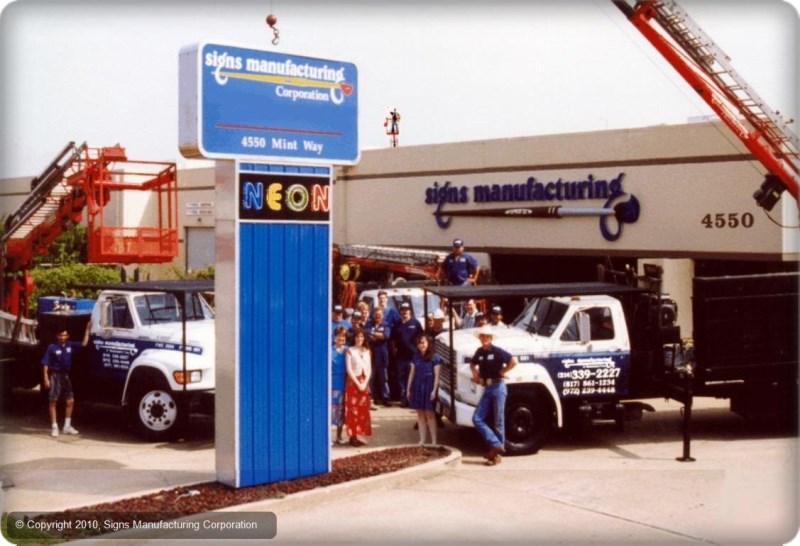
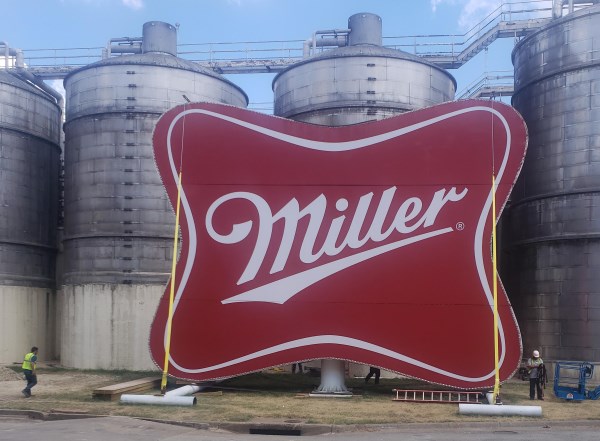
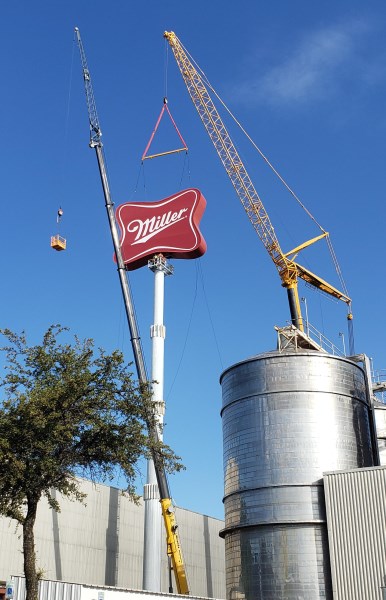
Whether it's the largest sign in Texas, above to the left, One of our Sunburst LED Signs™, or one of our smaller ones, Signs Manufacturing manufactures, installs, and services them all. The Miller sign is over 35 feet tall and over 45 feet wide. Notice our Quality Certified Signs™ Technicians to the left and right of the sign on the ground, and under the sign as it is being installed on it's 150 foot tall pole. We are the ONLY manufacturer of Digital LED Signs in Texas, and provide factory-direct sales and service. The Signs Manufacturing Your-Location Sales Team's Personalized Service
Let us meet with you in your office, or at your new signs location, or home, or anywhere. You will probably have a firm quotation for what you want during our meeting; certainly no more than a day later. There are 19 questions you must have answers to before investing in signs. Questions not about the signs themselves, but about how the signs will be perceived, and how long they will take to pay for themselves. Our sales team will bring you a COMPLIMENTARY PROFESSIONAL MARKET SURVEY of your new signage locations. Click on the "Sign Market Research" tab to the left for details. We can design and build your next sign while maintaining social distancing
Our showroom is open and sanitized so you can safely review the different options available for your new signage. Also, we have many options to help design your new look, from collaborating remotely (from your own home bridged to our design team) to designing with you in our Projection Room, which is large enough to maintain Social Distancing. Are You a "Visual" Person?It is difficult to picture what a sign is going to look like. What do you picture when we say "triple-layer multi-colored lighting with a textured backplate?" Our showroom is designed to solve that problem. Most people are visual ... they need to see something firsthand to understand what it is and whether it has value to them. Seeing is believing!
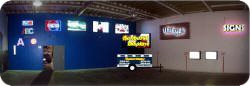
Visit Our Unique Signs Showrooms (including our LED Electronic Signs, our Sign Lighting Laboratory, and the Modern-Sign Museum™)Now withLive Showroom Demonstrations of Products that Improve Your SignsAll our products are on display, including our digital LED sign options and our newest product WindowVision™. Click here for more details on our Showroom. Or click here for details on the specific signs we manufacture. We are constantly innovating with newer, better, more dazzling ways for you to establish your business in the eyes of your customers. Unique in the entire sign industry, Signs Manufacturing™ built an 85' by 50' (over 4,000 sq ft) indoor sign lighting laboratory and showrooms to help its customers decide which sign innovation is the right one for their business as well as to test the longevity, visibility, and effectiveness of all the lighted signs we manufacture. Seeing is believing! Don't buy a sign from a drawing, a slick website, or photo-shopped pictures, when you can actually see and compare real signs. Our Showrooms now contain over $750,000 in business sign ideas alone, not to mention signs for churches and schools! We also have an interactive storefront that will allow you to see what effect multiple sign ideas have on your street presence. "I almost made a huge mistake by not listening to you and visiting your showroom prior to buying my sign. I thought I knew what I wanted, after listening to so many salespeople...boy, was I wrong. My vision of the sign did not jibe with what it would really turn out to be, even after viewing so many drawings. It was obvious the moment I entered the showroom. If I had stuck to my guns my sign would have been a disaster. I would have wasted a lot of money." - Cecil Drake, Drake Communications
One-Stop Shopping™ for Custom Signs in Dallas-Fort Worth, TexasLooking for the best sign company in Dallas or the DFW metro area? At Signs Manufacturing & Maintenance Corp., we make it easy to design, build, and install your perfect sign all in one place. Design, Build, and Approve Your Sign, All in One VisitWe’ve invested in remarkable facilities so you don’t waste weeks deciding what your sign should look like, what size it should be, or what colors to use. Instead of sending designs back and forth for months your team can make every decision in just a few minutes. Our One-Stop Shopping™ experience includes:
Visit the Largest Sign Showroom in TexasOur Dallas-Fort Worth sign showroom lets you compare LED message centers, channel letters, monument signs, pylon signs, and lobby displays side by side. We welcome business owners, property managers, and sign committees ... there’s plenty of space for everyone. Schedule a visit today to design your sign and approve everything on the same day. Once you’re done, we’ll take it from there ... design, engineering, permitting, manufacturing and installation are all handled in-house. Can’t Visit Our Dallas Sign Factory?If you can’t make it to our facility our experienced team can visit your location anywhere in the DFW metroplex, or meet with you via video conference. But, if possible, we recommend spending a few minutes at the showroom in person. You’ll save time, money, and stress. Ready to get started? Call us today at 972-850-3373 or contact us online to experience true One-Stop Shopping™ for signs in Texas. Guaranteed Highest Quality...Guaranteed Lowest Price™As detailed on the pages that follow, everything will be done to make your sign look better, and last longer...Guaranteed. Signs Manufacturing™ also guarantees that our price will be the lowest price you can obtain on the products described in this website; now or anytime during the next 90 days. If you are offered a lower price by someone else we will match that lower price PLUS give you 10% of the difference.
Sign Cost InformationWe sell our signs FACTORY-DIRECT, WHOLESALE to the public, INSTALLED.Each Sign Type, above and on the "Sign Types" page, has a "Cost" tab under its "Pricing" tab that lists general budget pricing for that type of sign and explains our 5 different payment options. But, please, contact us to develop an exact plan to meet your particular needs - for free (see our "Design Center" page!) Our professional staff will usually have exact quotations, and exact scale drawings of your signs installed on your building or property ready for you the same day we meet with you. (Much faster than the 2 1/2 week average in our industry.) Contact us NOW...Please! If you are planning for the future, please bookmark our website as a "Favorite" so you can find us when you are ready. Thank you. This is what we do to buy groceries!
Click our "Customers & Photos" tab on our "About Us" page to view a partial list of our customers, photos of their signs, and comments. Many Different Ways to Purchase Signs
Click on the "Cost" tab on the "Sign Types" page for details. Zero Down To help you open your business we have worked with one of our lenders to create an exclusive NO DOWN PAYMENT lease. Now you can pay for your sign totally out of your businesses' future cash flow. Fraud Protection"After being ripped-off by one sign company, who took my several-thousand-dollar deposit but never delivered my sign, I was nervous. I'm sure glad I met you guys!" - Paul Lewis, Jubilee MortgageSigns Manufacturing™ is insured, registered, licensed and bonded per all City and State regulations, and even carries product liability insurance to protect our customers, and their customers, which is very rare among sign companies. We even offer our customers free coverage on a $2,000,000 insurance policy providing Deposit Insurance if we were to default. Visit our "Cost" tab on the "Sign Types" page for details on all of the above. We've got you covered!" ...I had to hound Vital ***** (a Car Wrap company) for weeks and weeks, then I had to call ******** (the manufacturer) to finally get a hold of Vital *****. I thought Vital ***** was taking my deposit money and running. When he asked for the second deposit I was kind of hesitant based on my experience with him. I did some research on Vital ***** and there were judgments in Dallas County, civil judgments for Vital ***** taking money and not putting up a sign! But the manufacturer said I had to deal with him, and he already had a great deal of my money.The installation company he subcontracted with, City *****, finally did show up and after giving them another $30,000 the sign was installed but City ***** didn't pay Vital *****, I guess, his "fair cut" of it. Vital ***** was initially mad at City ***** and then he was mad at me, so he came and took the controller out of the sign so now it doesn't even work! I tried to go back to ******** (the manufacturer), and gave them all of the documentation and they said it's between me and Vital *****, they won't do anything about it. I'm never dealing any way but directly with a manufacturer again!" - Mr. Sinkler, Freedom WashWhy Buy Factory-Direct, from a State-Licensed Company?TURN-KEY Design, Manufacturing, Installation, and ServiceWhy not buy from a Sign Dealer (also called a Sign Broker, Car Wrap company or a Sign Store?) Would you give a car dealer $10,000 and tell him to buy you the best car he can for the money, sight unseen (or from a drawing?) Don't you think you would get the car that made him the most? Do you think you could meet your needs asking for the cheapest car he can buy? Why would a sign dealer (Car Wrap company or sign store) be any different? Remember, they are merely buying a sign from a manufacturer to resell to you, usually to resemble a drawing, making the most money they can. You need to know ALL of the details on how your sign will be manufactured, and how it will be installed. It needs to meet YOUR needs, not the seller's profit goals. What is he telling the manufacturer you don't need? Believing "...a sign is a sign" gets you a Yugo instead of a Cadillac. Remember the Yugo? They didn't last very long, either. Also, most sign dealers, Car Wrap companies and sign stores cannot legally install or service an electric sign. Ask to see their license.
Now, who provides the warranty? The manufacturer, the installer, the salesman, anyone? If the sign was installed illegally do you think they'll honor their warranty? Did they REALLY obtain your City sign permit? Is the sign even safe? As a large, both UL and ETL listed manufacturer, our name is on all our signs. Just like you, we can't afford to have a bad sign destroy our business. We have to care, particularly with our LIFETIME* warranty.
So someone can sell you signs and not be licensed to install or service them. You may have to have this done. But unless the electrical signs you buy are "listed" (U.L. usually) they won't be allowed to be installed in Texas, a State of Texas Consumer Protection Safety Law designed to insure that signs are safe to use, with a few local city ordinance exceptions. It is not illegal to sell them to you, however. Buy carefully. "I had a ****-a-**** (sign company) right across the street … that store's out of business now … I found out they hired some other company to build and install our sign and they did a really #@%&&$ job, the thing has never lit right. ****-a-**** Corporate won't do anything, they say the closed store was an independent franchise, and the sign builder/installer won't fix it, they say we weren't their customer. I need you to come out, tell me what it will cost to get the thing working properly and get it fixed." - Chris Jennings, Jimmy Johns "I Want a Sign Company Near Me"Even
if you are looking for outdoor signs our Sales and
Design Teams, consisting of 13 highly-trained
individuals, are at your beck and call.
You will probably have a firm quotation for what you want during our meeting; certainly no more than a day later. We are not just a sign company. Our suppliers say that we are the largest sign company in the DFW Metroplex. We can meet any demand, any schedule, anytime! In addition to your personal sign consultant, your signage project will be managed by:
We are trained to identify and solve problems before they affect your sign's delivery. If problems do arise, our sign company's goal is a trouble-free experience for our customers. Our staff can handle it! Smaller sign companies have limited resources to dedicate to problem-solving. Free Factory TourCome and see the array of equipment and tools, and the facility dedicated to making good signs. Tour our state-of-the-art sign manufacturing facilities. Signs Manufacturing™ is America's innovation leader in creative solutions to signage manufacturing and durability. Learn more about our accomplishments by by accessing our Innovations webpage. See how your sign will be made. Contact a sales consultant to arrange a plant tour. Full Service Facilities (Designing, Engineering, Permit Filing, Listed Manufacturing, State-Licensed Install and Sign Repair)
Please visit our four-building manufacturing campus (Two sets of joined buildings.) (2017 commercial drone photo.) If you are seriously considering buying from someone else we suggest that you also visit their location to observe if they can actually do what they say they can; or at least "Google" their address. A lot of competitors who present themselves as manufacturers actually only buy and resell signs, working out of a house, office building, small warehouse, or storefront!
Our Gang
State Licensed Sign Installation and Sign Service
Our technicians are State and Quality Certified Signs™ certified. Our State electrical contractor, and electrical sign contractor license numbers are: TSCL 18015, TSCL 18016, TECL 17503. Click the "Installation & Service" tab on the left for specific details on sign site surveys, sign permits, sign installation and sign maintenance services. ZIP Codes 75001 thru 76958. Area Codes 214, 254, 430, 469, 682, 817, 903, 940, and 972. Serving Collin, Cook, Dallas, Denton, Ellis, Fannin, Franklin, Grayson, Henderson, Hill, Hood, Hopkins, Hunt, Johnson, Kaufman, Lamar, Navarro, Parker, Rockwall, Somervell, Tarrant, Titus, Van Zandt, Wood, and Wise Counties in Texas. We also have signs in 43 different states, and 6 other nations.
The Knowledge Tree™ - Using Our Website to Learn
An example of our dedication to helping our customers succeed is this website.
We refer to our website as The Knowledge Tree™. We placed the website online in 1997, and have worked to improve it ever since. Our database to create it requires over 8,000 pages; more information than some "encyclopedias." The Knowledge Tree™ tells you how we manufacture our signage, and why. Knowledge Tree™ subjects are on the left side of every page. For instance, click our "Sign Types" tab to the top-left, then pick any of our products, then explore that page's tabs and discover how we make each sign to last; including the use of CNC manufacturing, rust-proof metal, structural-steel frames, high-end automotive paint, high-impact plastics, and most importantly, sophisticated protective coatings.Go to our "About" page and select tabs to learn about the history of Signs Manufacturing, and many other subjects. Unsure, or unconvinced about the importance of signage to the survival and success of a business? Click our "About" page's "Importance of Signage" tab to learn what Nationwide studies have proven. Please use and enjoy this 550+ page website with over 3,000 images, the largest information resource about signs on the internet, created so you can learn about all types of signs and how you can control their affect on your image and business. Consider "bookmarking" our site as a "favorite" for easier reference later. We believe that if you're a knowledgeable purchaser there's a real good chance you'll become our customer. Signs are Like BoatsThere are $50,000 boats; there are $400 boats. The devil is in the details. Our websites, our literature, and our quotations describe in detail what we do when building signs, and why we do it. 
Many competitive quotations that customers show us, and competitors' websites, are for “a boat.”
Have you had a different experience? Considering the proven importance of a quality sign to the success of a business, do you really want to trust “a boat” to keep your business afloat? Buyer Beware! You must have finite details to evaluate competitive signage quotations. Nothing hurts a business more than bad signage. Frequently Asked QuestionsWhere is your sign company located?We service Dallas, Fort Worth and the entire North-Texas Metroplex, although we park our sign installation trucks at our 5-building sign fabrication facility in Dallas. What kind of signs do you build?We build, in-house, commercial signage for stores and brick-and-mortar buildings, businesses, churches and more. Who handles the sign permitting?Signs Manufacturing is a turnkey sign company that will take care of the entire permitting process for you. Let us handle it! How much does commercial signage cost?Pricing varies dramatically on the type, size, etc. However, our Sign Experts will have pricing and options to you within 24 hours. Contact us for a fast sign quote. LiteratureWe believe we are the only sign company that offers informative literature on signage, our "Sign Buyer's Guide" series. Our most popular Guides are: 
LED Signs Full-Color or Monochrome 52 Page Brochure 
Lighted 3D Channel Letter Signs 44 Page Brochure 
Wall Cabinet Signs 40 Page Brochure 
Pole Signs and/or Pylon Signs 40 Page Brochure 
Monument (Ground) Signs 40 Page Brochure 
Lobby and Reception Signs 20 Page Brochure Additional "Sign Buyer's Guide" Literature Available:
As Seen on SignDawgsTV™
SignDawgsTV™ is one of YouTube's most successful series, with 3,000,000+ viewers. Over 100 episodes continue to be viewed over-and-over. You can view all SignDawgsTV™ episodes @ SignDawgsTV.com
|
|||||||||||||||||||||||||||||||||||||||||||||||||||||||||||||||||||||||||||||||||||||||||||
|
|||||||||||||||||||||||||||||||||||||||||||||||||||||||||||||||||||||||||||||||||||||||||||






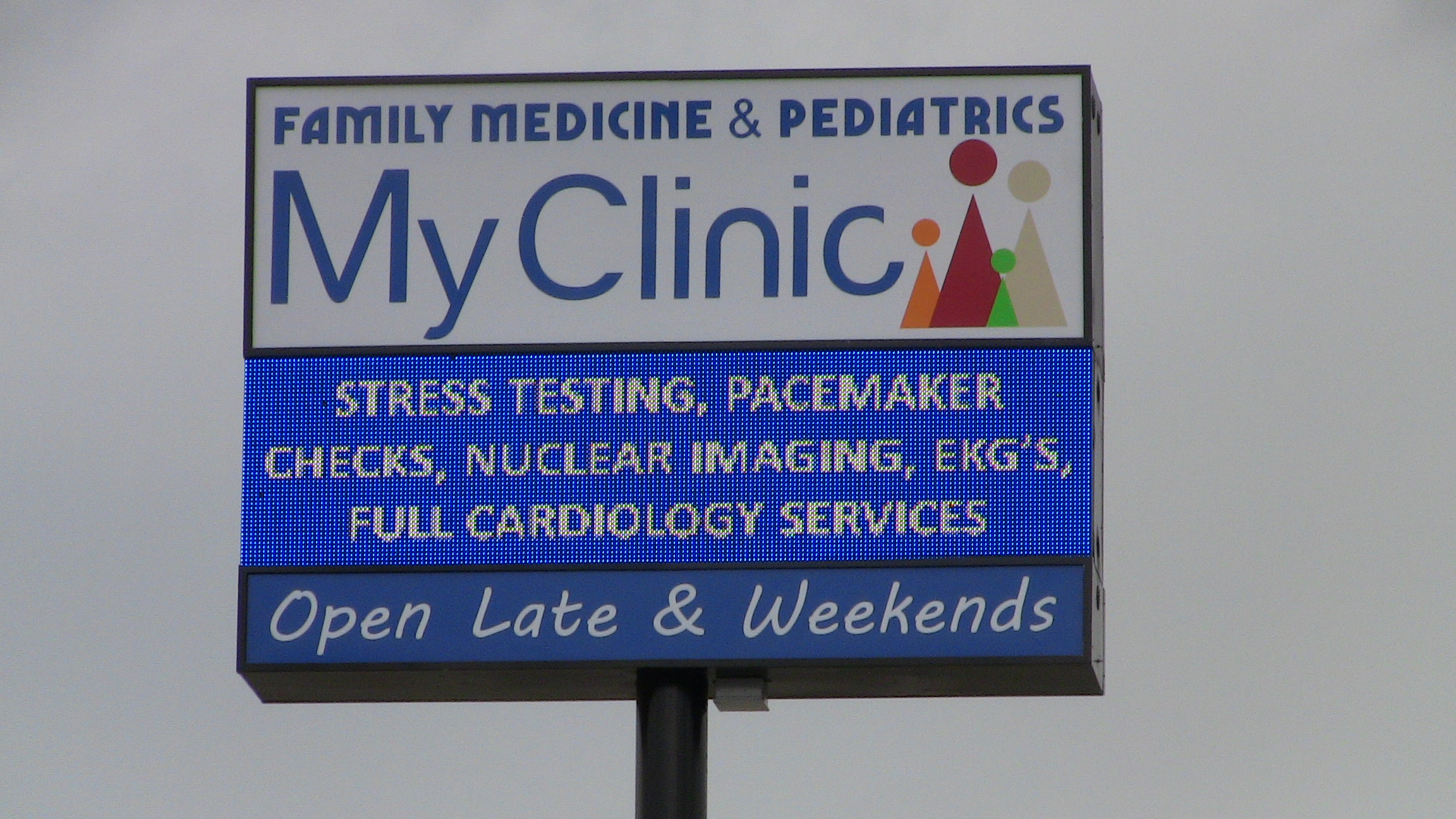

 Interested in the concept of electronic message
centers, but unfamiliar with their cost?
Interested in the concept of electronic message
centers, but unfamiliar with their cost?

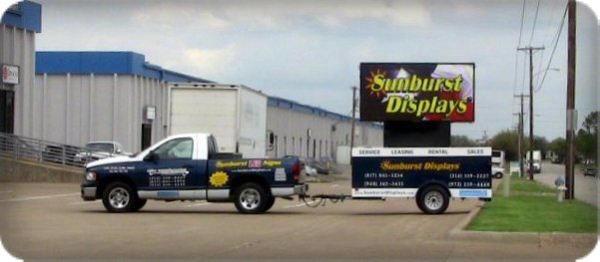
 There is no question that LED electronic message centers are the business signage communication wave of the future. Local advertising has never been cheaper because of them.
 With an electronic message center you are leaving your computer out in the Texas rain, ice, heat and cold, and tornados and hurricane-force winds are trying to blow it away.
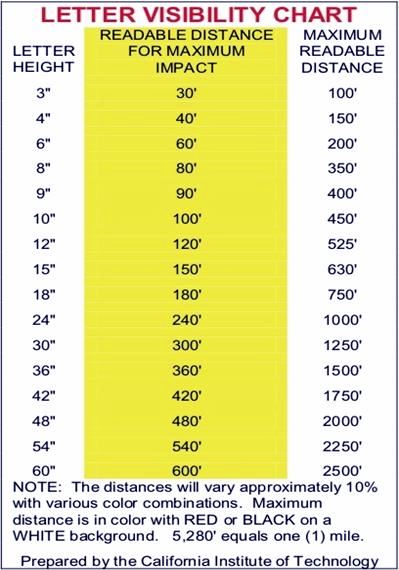

 Intertek is over twice the size of UL, and has a greater global presence. UL is the largest in the USA. We have both companies test and apply Listing Marks to various signs.
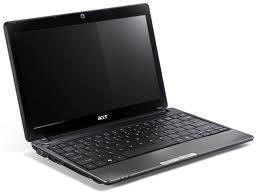 Tutorials are a part of the computer’s pre-programming.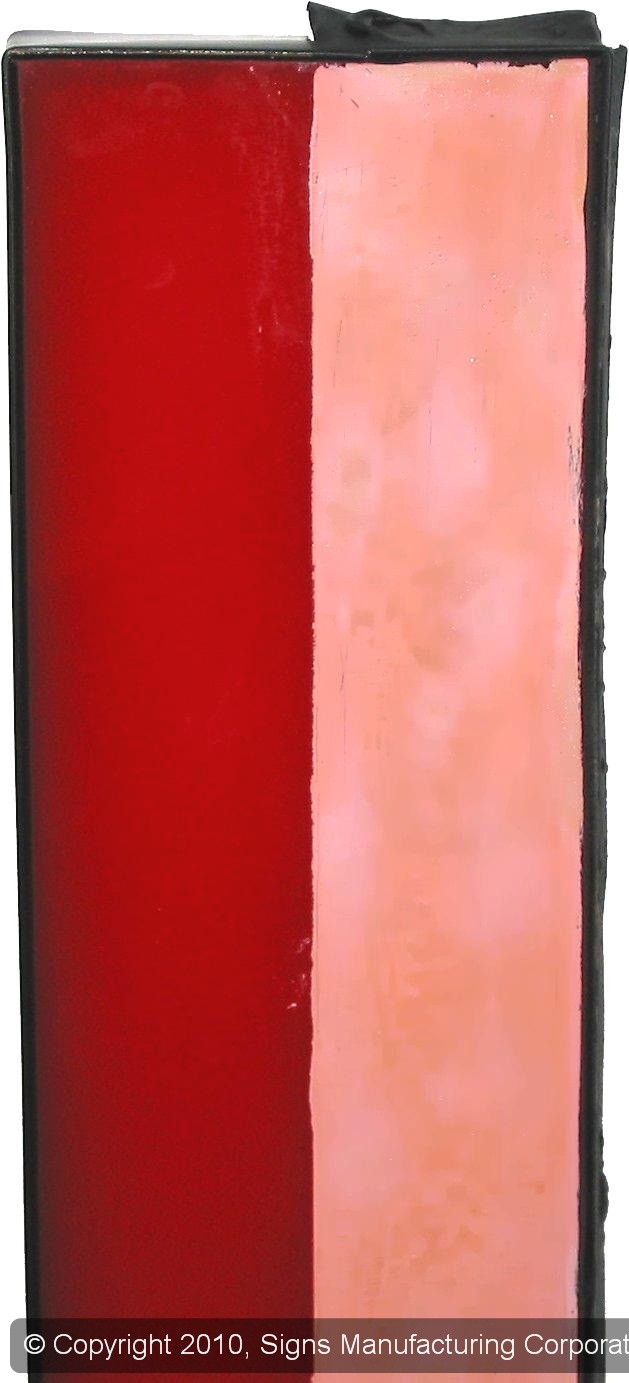
.jpg)
.jpg)
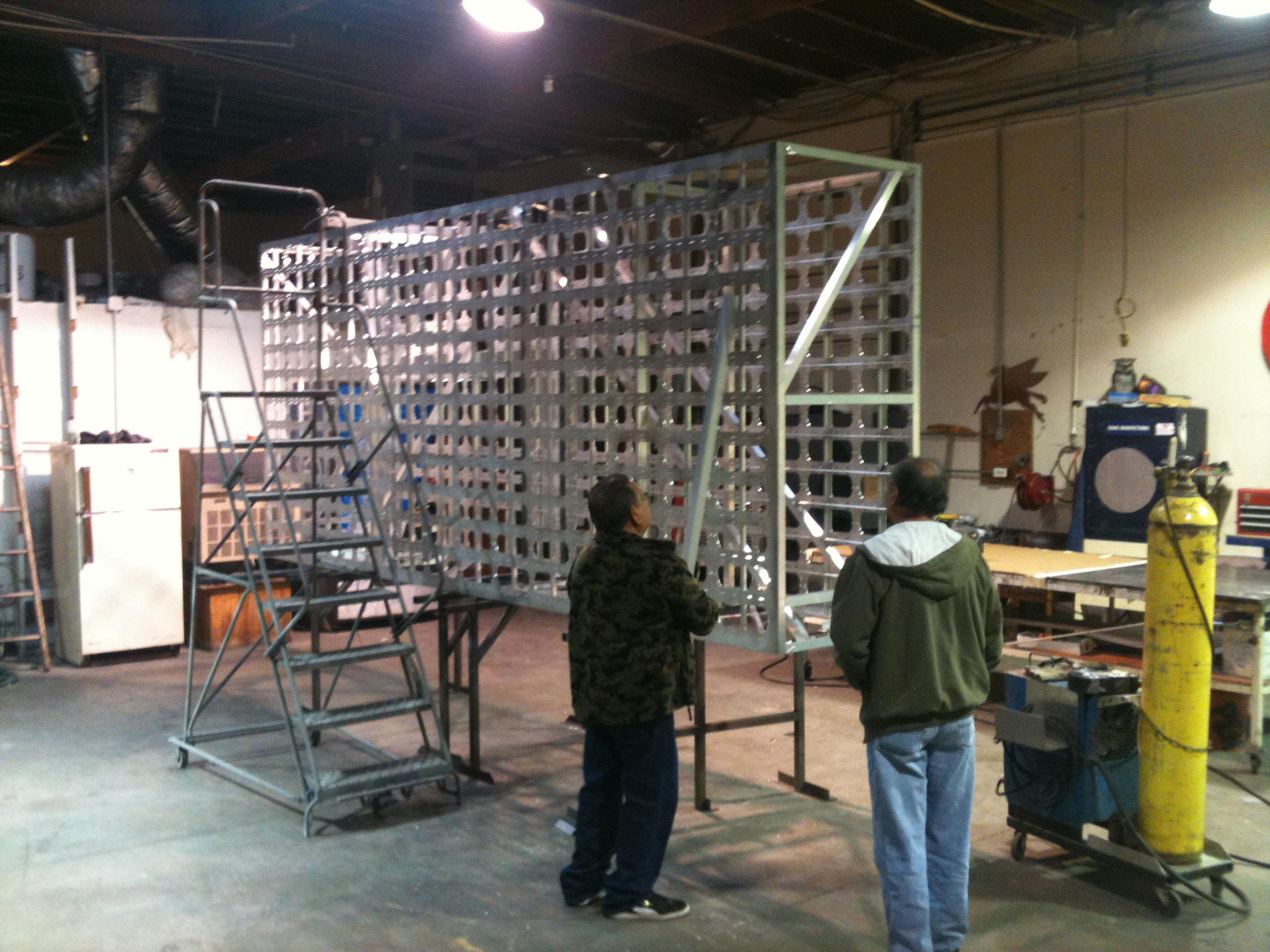
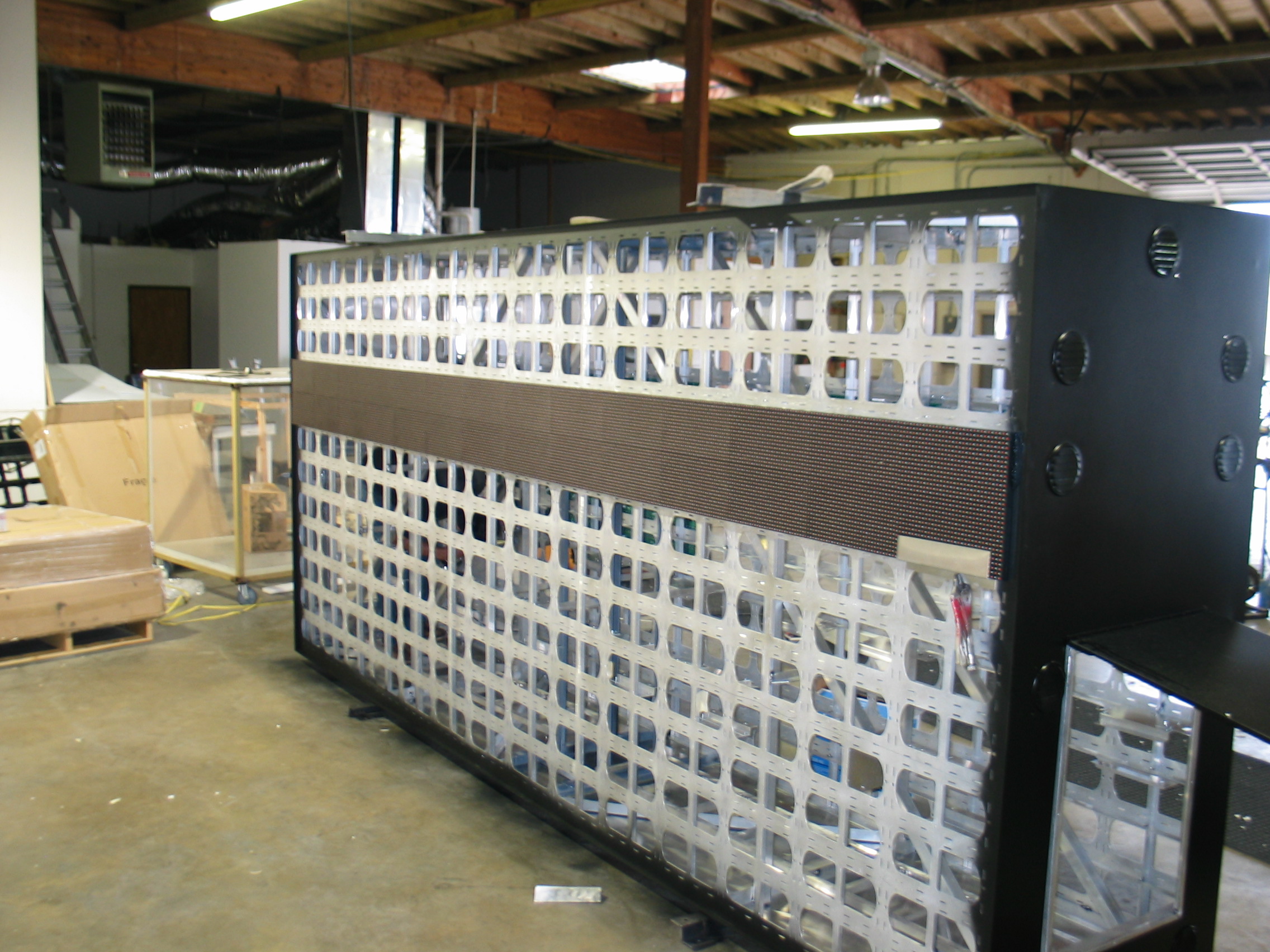
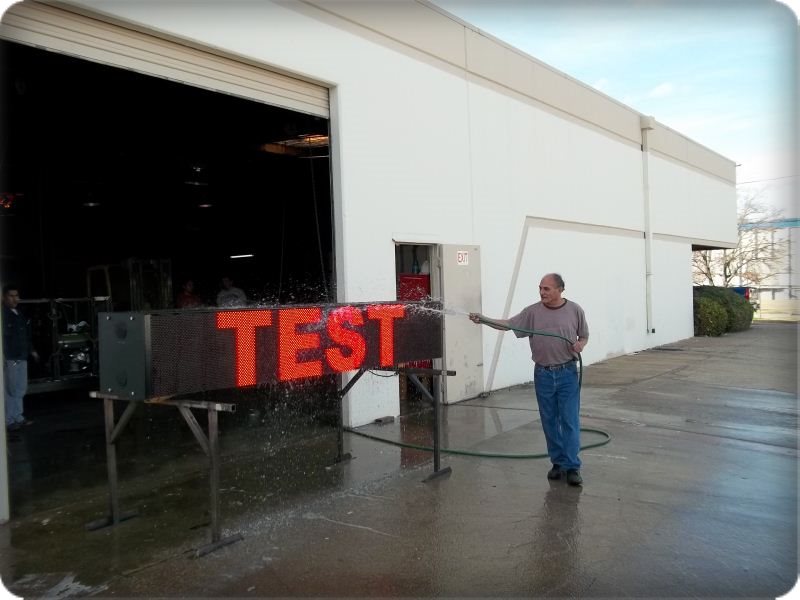
 All Sunburst Displays™ shop, installation and service personnel are QualityCertifiedSigns™ trained technicians.
 Sunburst Displays™ warranty is the
STRONGEST TOTAL WARRANTY for Digital Electronic Message Centers in the industry!!!ry!ry!ry!
Sunburst Displays™ warranty is the
STRONGEST TOTAL WARRANTY for Digital Electronic Message Centers in the industry!!!ry!ry!ry!

 Your
sign forms that very important "first impression" your
potential customer has of your business. Your
sign must always look nearly as good as it looked the
day it was installed so that you don't give potential
customers a worsening impression of your business as your sign ages.
Your
sign forms that very important "first impression" your
potential customer has of your business. Your
sign must always look nearly as good as it looked the
day it was installed so that you don't give potential
customers a worsening impression of your business as your sign ages.

 The Dallas/Fort Worth "Metroplex" continues as the
fastest growing large city area in the United States, year-after-year. It is the fourth
fastest growing such area in the world. As fast as in China or India!
The Dallas/Fort Worth "Metroplex" continues as the
fastest growing large city area in the United States, year-after-year. It is the fourth
fastest growing such area in the world. As fast as in China or India! We
serve and have installed signs in the Texas cities of
We
serve and have installed signs in the Texas cities of


 Ask your Sign
Consultant for details.
Ask your Sign
Consultant for details.
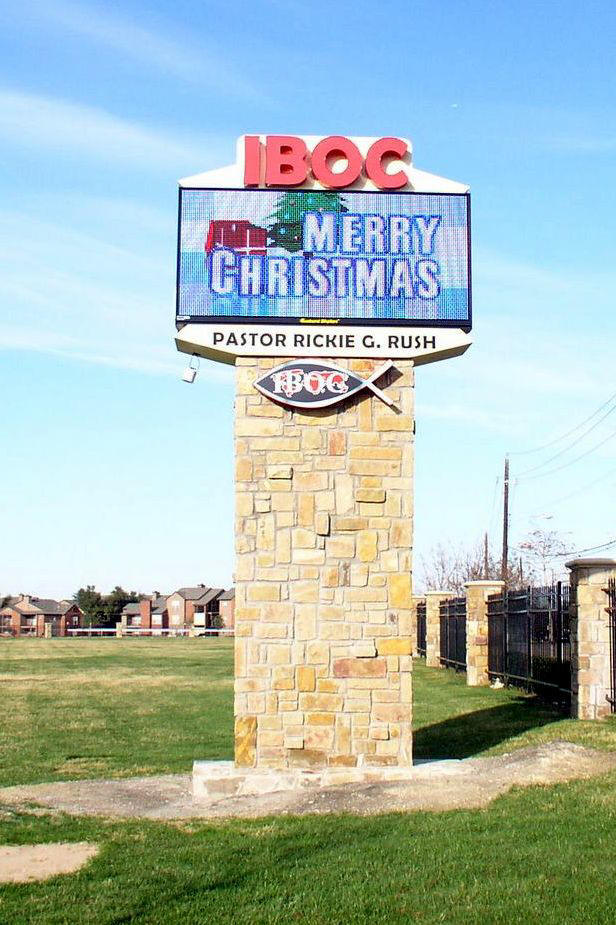
 No matter what types of signs you are interested in, our sales team, consisting of 11 highly-trained individuals, is at your beck and call.

 Cash, Credit Cards, Conserve You Nest Egg™ 0% 15-month financing, Signs on Time™ Conventional Lease/Purchasing or our Pay as You Grow™ Accelerated Lease/Purchasing.
 If you wonder if a sign-seller can legally install and
service electrical signs through-out Texas go to
If you wonder if a sign-seller can legally install and
service electrical signs through-out Texas go to
 Let us meet with you in your
office, or at your new sign location, or home, or anywhere.
Let us meet with you in your
office, or at your new sign location, or home, or anywhere.
 "Signs
Manufacturing &
"Signs
Manufacturing & 

 It IS the definitive source on signage information, ranked by Alexa® in the top 0.05% of ALL websites in the world, the top 0.01% in the USA!







_medium_110.jpg)