
.jpg)
Lighting Choices for Wall Cabinet Signs
There are many different ways that you can light up your sign: neon, LEDs, fiber optics, (H. I. D. High Intensity Discharge), spotlighting, etc. However, for most sign cabinets fluorescent lighting is still the best. Recently there have been dramatic advances in fluorescent lighting that have not been widely utilized in the sign industry.
If you are aware of the recent developments in automobile headlights, how some headlights are brighter and more visible than traditional headlights, you can understand how simply selecting the proper light spectrum and intensity can dramatically affect the visibility aspects of your sign.
There are two important indexes for judging the importance of various lamps in illuminating your sign: Color Rendering Index (CRI) and the light’s color, expressed as degrees Kelvin (K).
In degrees Kelvin a lower number is a more “yellow/red" light, a higher number is a more “blue" light.
Interestingly, the color of “daylight" varies from the equator to the poles. But it is generally accepted as about 6000K with a CRI of 100.
A CRI of 100 is perfectly matching the sun’s effect on colors.
In white neon the old standard has been that 6500K neon is best for lighting a sign face. It has a CRI of 65. The tri-phosphor “rare earth" neon Signs Manufacturing™ uses to illuminate digital graphics, translucent paint, translucent vinyl, and color transparencies has a CRI of almost 100.
The “multi-vapor" HID lighting we use is 6000K with a CRI of almost 100. These are the highest ratings obtainable with HID lighting. Other forms of HID lighting have lower values.
Fluorescent lamps, the most common way to light a sign cabinet, offer choices.
Because of a general lack of knowledge most sign companies, and therefore the non-major-retailer signs, have gravitated to cool white, high output (CW HO) lamps. They were the original color available, and they are cheaper. Not a lot cheaper, but cheaper.
Unless you work for a very major corporation and have been paid to study this issue this information has not been readily available until now.
 Thanks
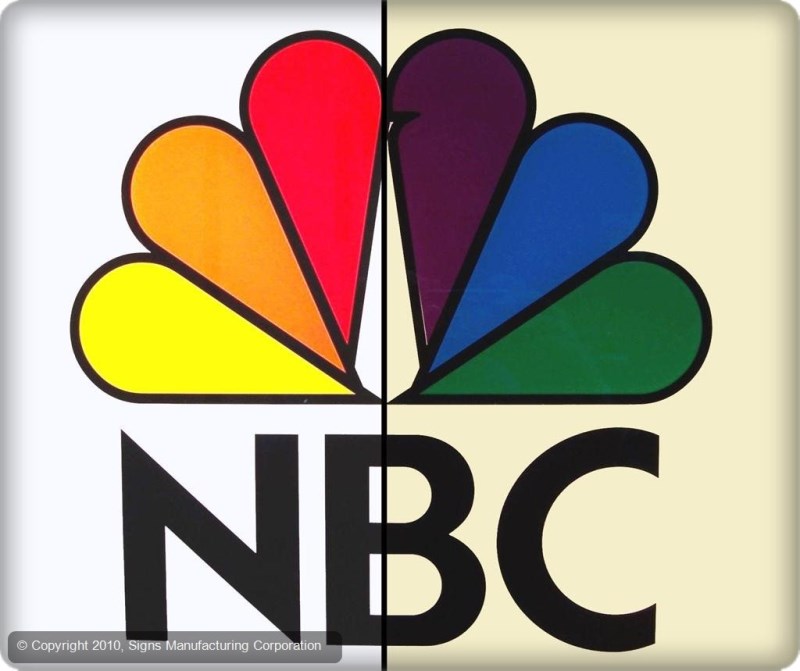
to digital photography we are now able to show you what we
are talking about without asking each potential customer
to visit our lighting laboratory.
Thanks
to digital photography we are now able to show you what we
are talking about without asking each potential customer
to visit our lighting laboratory.
The left side of the picture is a sign lighted by Daylight HO lamps, the right side with CW HO lamps. A thin black line has been placed where the two pictures are spliced together.
CW HO lamps are 4500K with a CRI of 50.
The best fluorescent lamp now available for a signs application is a “Daylight HO" lamp. It is 6000K and has a CRI of 65, the highest value we can obtain with a fluorescent lamp. (This color and CRI are also available in VHO lamps.)
These lamps are slightly more expensive, but they are what we use in the fluorescent lighted signs we manufacture. If you have existing outdoor fluorescent signs you would be wise to have us install Daylight HO lamps in them. Your signs will certainly be more noticeable.
Our simple goal is to get a potential customer to notice your sign first; rather than look at someone else’s sign and never notice yours.
Fluorescent, HID, and Neon Brightness
Glass tubes 8 mm to 18 mm thick are used to make “neon" lamps, 18 mm to 30 mm thick to make so-called “cold-cathode" lamps, thicker to make “fluorescent" lamps.
Other than size and the type of electrode used, there is no difference between neon and fluorescent lamps of the same color output. The size and/or color does change the energy requirements, however, which is why they use different power sources. All things being equal, the thinner the tube, the more light it puts out!
Unless there are over-riding lumen requirements, or landlord restrictions, we will adjust your lighting to give you the brightest sign possible.
We always space fluorescent lighting tubes, and HID lighting, 25% closer than virtually all other sign manufacturers, much closer than the "cheap" manufacturers, to insure a bright sign.
Again, our simple goal is to get a potential customer to notice your sign first; rather than look at someone else’s sign and never notice yours. When you use electricity it should attract customers.
We can make you an even brighter sign, click our Brighter Signs tab to the left.
Incandescent Lighting
Incandescent (household) lamps begin disappearing in 2012, starting with the 100 watt lamp, and will be mostly gone by 2014.
The Government has mandated that all these lamps, with 22 exceptions, must begin being at least 25% more energy efficient starting in 2014, 70% more efficient by 2023.
"Sign Service" lamps are exempt, but whether or not lamp manufacturers will recognize a big enough market to continue to make just them is problematic.
Also, Sign Service lamps not the type of lamps used to externally light signs.
SolarBrite™ Long-life Internal LED Lighting
Many companies manufacture LEDs. There are over 5,000 varied LEDs available, and they vary greatly as to brightness, lux, light-dispersal (viewing) angle, useful lifetime, and lifetime.
Some are very cheap, some are quite expensive.
Signs Manufacturing™ only uses SolarBrite™ long-lasting LEDs that are rated to retain 80% of their brightness for 60,000+ hours. These are the most expensive, but highest value, conventional LEDs. Our selection of LEDs is what makes our signs brighter, and last longer.
As an example, a White SolarBrite™ LED is 280 lux, compared to our BrighterSigns™ neon's 235 lux, or standard neon's 140 lux. "Lux" is the candle-power of light shining on a surface.
However, with visible light sources "nits" are more important than "lux." As explained below, Signs Manufacturing Corporation's SolarBrite™ LEDs are 8,000 to 13,000 nits, depending on color.
A SolarBrite™ long-life LED incorporates a new kind of chip, different from all other LEDs. Signs Manufacturing™ is an industry leader in the implementation of new technology in advertising.
SolarBrite™ LEDs utilize military specification coatings on the circuit boards the LEDs are attached to, preventing corrosion and electrical problems.
Like neon, LEDs are also affected by voltage. For instance, an LED will also burn nearly 100% brighter if you double the power feeding it. The LED will last about 1/6 as long, however, making this alternative quite expensive in total cost. We power our SolarBrite™ LEDs properly.
Different Lighting Options For Different Needs
Most people think of lighting as just ... lighting. It's what makes your sign noticeable on a cloudy day. It's what gets your business seen, and lets people know that you are there and, sometimes, that you're even open!
Business owners tend to view all lighting as the same. This is not true, and it can be bad for your business if you have the wrong lighting.
Randall Brown, formerly an owner for a chain of Whataburger locations throughout Texas and Florida, would drive by his stores every month, EVERY ONE OF THEM, to look at the lighting. If there was a sign with a letter out, or a parking lot light out, or a light inside the store that's out, or even a piece of neon (he loved lighting up his stores with neon) that wasn't working then he would contact us to repair it right away ... and his Store Manager would pay for it out of his pocket!
Randall understood the value of his signs being seen, and the importance of lighting.
One of the biggest mistakes retail store owners make is using gooseneck lighting. Sure, it's fancy and attractive and we certainly like the looks of it. But gooseneck lighting is dim. It does NOT make your sign stand out.
The purpose of a sign is, more than anything else, marketing your organization. It needs to stand out. It is the #1 advertising tool that you have ... make sure it is seen!
However, in some cases the type of lighting you are using should NOT be the brightest you can possibly get! Sometimes, the color of the lighting is more important than the level of illumination.
Take lobby signs, as an example. In a lobby you don't want that sign to blind everybody walking through your door. It should be a subtle glow that emphasizes your brand and creates an excellent first impression.
For backlighting, where the lighting is indirect such as reverse letters where the lighting is against the wall and not out the face of the sign, the lighting needs to be soft. Its purpose is to not only highlight the sign (make it glow) but also to bring out the character of the wall behind it. The lighting should not wash out the wall texture and color.
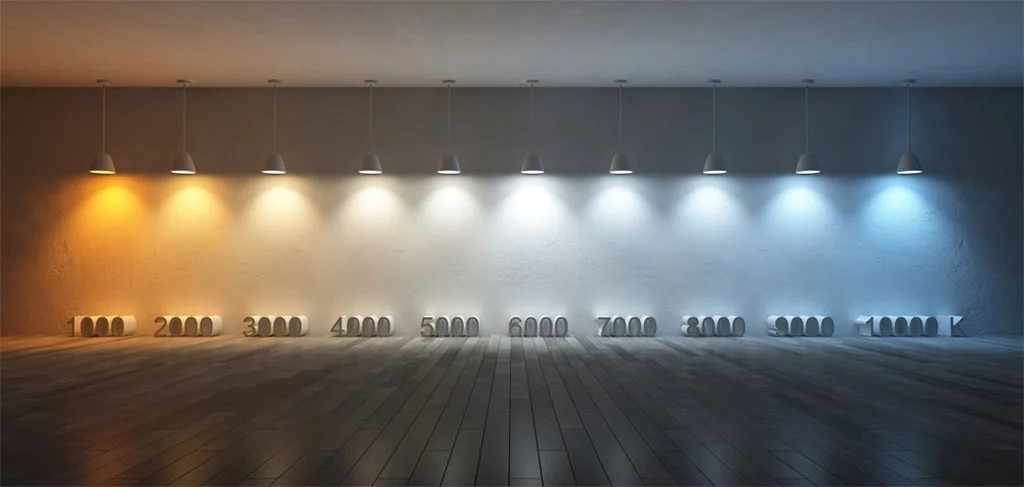
Most sign companies buy whatever is available without consideration of lighting temperatures or the use/purpose of the lighting that they are using. Frequently the choice comes down to the cheapest product they can purchase ... that's what they use.
We know the difference, and the value of using the correct lighting for the job. Lighting that is used for backlighting or lobby signs should be a soft, or warm light. We typically use 5000 kelvin lighting for this application, although depending on the scenario we may choose a warmer color.
Let us help you make sure that the sign you are getting is properly built with the correct components for the purpose of the sign.
Different LEDs for Different Uses
Every individual LED bulb is designed for a specific purpose. As an example, the design of an LED for a flashlight is different from a LED designed for an LED electronic sign. One is designed to focus all light straight ahead, the other to disperse its light evenly in all forward directions.
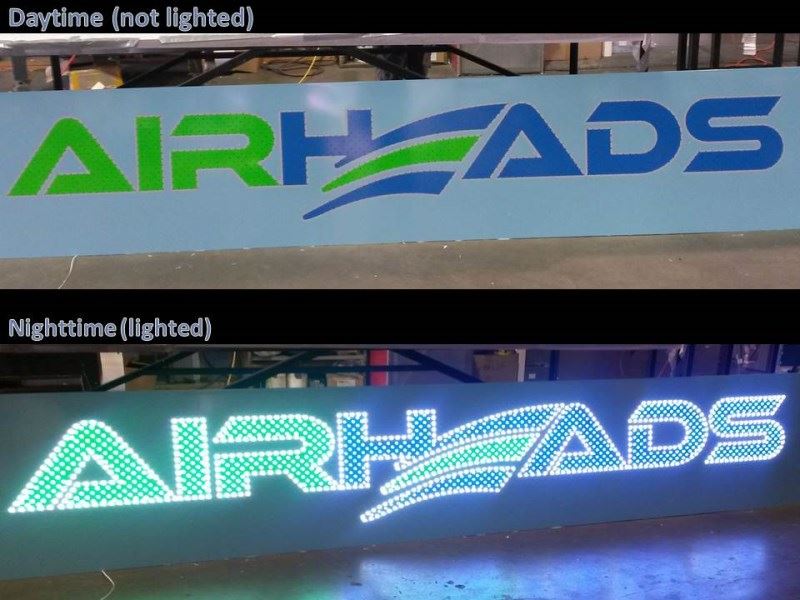 Significantly, almost all LEDs are not designed to meet a strict color-match. Most back-lighting LEDs are designed to light a colored plastic.
Did you know that an LED that is superior at lighting channel letters with plastic faces is not the best choice to light a channel letter or sign cabinet with translucent vinyl or digitally printed graphics on a plastic or flexible sign face; or for creating the halo around a reverse-channel letter?
Most sign companies do not know this. In fact, the wholesale suppliers that supply virtually all sign companies do not even carry use-targeted LED products. For them, it’s “…one size fits all…"
We use SolarBrite ™ Color-Correct™ LEDs which are specifically designed for these use-targeted applications. Their light output has a color-corrected wave length; superior for lighting translucent colors from behind.
We always use the proper LED to give our customers the best sign possible…Guaranteed.
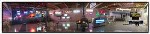
Please stop by and see all of these products displayed in our unique Sign Lighting Laboratory and Display Showroom.
NightLit™ Solar-Panel Lighting Option
 Solar
panels are ugly and expensive.
Solar
panels are ugly and expensive.
So what can you do when it is cost-prohibitive to run power to a sign location?
Signs Manufacturing™ created an affordable, attractive, unobtrusive answer. We created an outdoor, wet-location, sealed solar-panel and multiple-light combination pack specifically designed for signs. Patent and Listing Pending.
NightLit™ lighting is designed to not be as bright as an advertising sign; it is designed to provide adequate, attractive lighting for identification, directional, and informational signage purposes.
.jpg) Three screws/bolts can attach this
sign to virtually any surface. It is solar-powered with internal
back-up power rated to last 72 consecutive hours without recharging.
Automatic self-contained on-at-dusk, off-at-dawn controls.
Three screws/bolts can attach this
sign to virtually any surface. It is solar-powered with internal
back-up power rated to last 72 consecutive hours without recharging.
Automatic self-contained on-at-dusk, off-at-dawn controls.
An example of where it can be beneficial is building identification.
Modern America searches for locations using computer assistance, and by address and suite/apartment numbers, primarily. Even while driving.
The International Fire Code (IFC) 505.1 contains specific requirements for commercial building identification. Many AHJ’s (Authorities Having Jurisdiction) modify these basic requirements to require that building identifications, including both address and/or units identification where appropriate, be lighted to aid emergency service responders at night.
Frankly, this requirement also aids package and food delivery companies (UPS, FedEx, Uber, Lyft, GrubHub, etc.) Many apartment and condo management companies use this amenity of user-friendly lighted building identification as a selling point to prospective dwellers who might have guests/deliveries trying to find their apartment at night.
Specific to emergency response, some
AHJ’s require that lighted address identification remain lighted if the power supply to
the building is disrupted; a very good idea. But it has been very costly to
meet modified IFC 505.1 rules with existing structures because of the cost
of providing power and back-up power to retrofitting signage; until now..jpg)
Increased safety and convenience at an affordable cost.
Other uses?
-
Adding a lighted address to an unlighted monument sign.
-
Adding lighted directional signs in parking lots.
-
A lighted Valet Parking A-frame sign.
-
A lighted real-estate or construction temporary sign.
-
Lighted informational signs, directory signs, identification signs…etcetera, etcetera, etcetera.
It is relatively cheap, can be permanently custom-inscribed, custom-painted, UV-protected, vandal-resistant-coated, repairable, and readily available!
There are, however, size and design restraints on this technology. Discuss your vision with us; since we’re the ones who created NightLit™ we’re the experts. We’ll create a way to make it work for you.
Our initial product requires a 24-36" cabinet length, and a height of 15" or less.
Other Subjects You Will Want to Explore
Literature
We believe we are the only sign company that offers informative literature on signage, our "Sign Buyer's Guide" series.
Our most popular Guides are:
52 Page Brochure

44 Page Brochure

40 Page Brochure
40 Page Brochure

40 Page Brochure
40 Page Brochure
Also Available
Also Available
 |
|
 |
104 Product Videos |